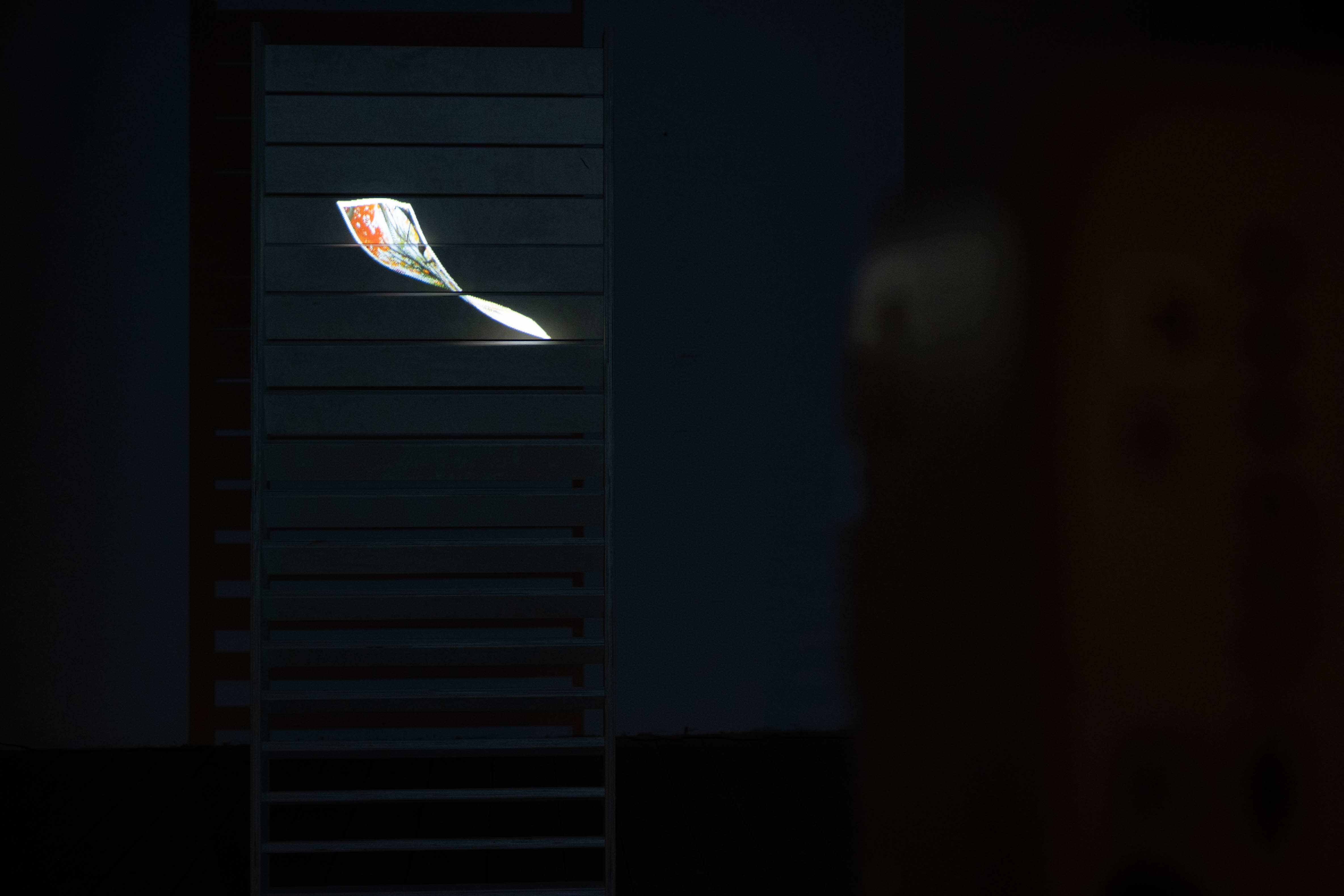
Memory Trace, 2025, Photo: Lars Gonikman
Memory Trace, 2025, Documentation Video, Camera: Lars Gonikman
2025, Interactive Installation
Memory Trace is a real-time interactive installation that combines the fragility of personal memory with AI technology, reconstructing and visualizing fading moments in a new form. The work begins with the cherished childhood memory of a persimmon tree at my grandfather’s house. As these scenes gradually blur over time, I capture them through drawing and reinterpret them using AI. By training on my drawings and archival childhood photos, the AI generates hundreds of possible images, blending the imperfections of memory with imagination and technological intervention to create entirely new visualizations.
Through a website, visitors can choose one of several memories and witness the real-time AI reconstruction process. The continuously generated images are presented as an animation reminiscent of Polaroid photos being printed endlessly and displayed on a wooden structure.
Memory Trace, 2025, Photo: Lars Gonikman
MOTIVATION
Memory Trace is a real-time interactive installation that combines the fragility of personal memory with AI technology, reconstructing and visualizing fading moments in a new form. The work begins with the cherished childhood memory of a persimmon tree at my grandfather’s house. As these scenes gradually blur over time, I capture them through drawing and reinterpret them using AI. By training on my drawings and archival childhood photos, the AI generates hundreds of possible images, blending the imperfections of memory with imagination and technological intervention to create entirely new visualizations.
Through a website, visitors can choose one of several memories and witness the real-time AI reconstruction process. The continuously generated images are presented as an animation reminiscent of Polaroid photos being printed endlessly and displayed on a wooden structure.
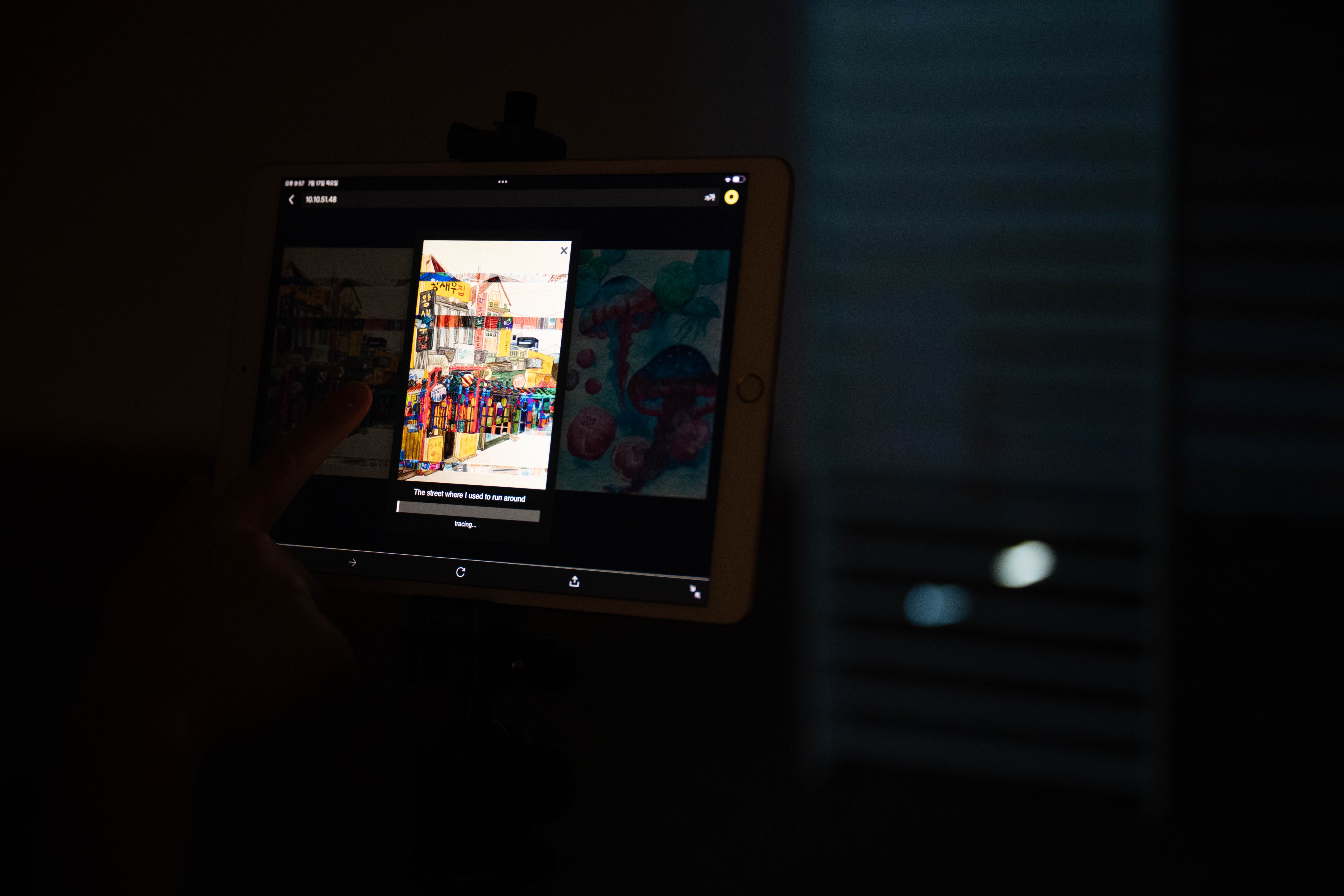
Memory Trace, 2025, Photo: Lars Gonikman
VISUALIZATION
The first step in this project was to draw the per- simmon tree that lives in my memory. The colors and shapes did not need to be perfect; what mattered most was capturing the tree’s distinctive features as I remembered them, as honestly as possible. For example, I focused on expressing the contrast between the rough, hard texture of the tree bark and the soft, ripe form of the persim- mons that had left a particularly strong impression on me. Based on these drawings, I began the re- construction process using AI. Within a short time, the AI generated dozens of images containing var- ious possibilities. Among them, there were images that closely resembled the tree I had imagined in my mind. I started to believe that if I generated hundreds more, I might eventually encounter a persimmon tree that felt even closer to my memory
Following this approach, I also drew and recon- structed three other memories using the same method. The AI-generated images were presented as an animation inspired by Polaroid photos continuously being printed, creating an endless stream of evolving images. These images were then projected onto a wooden tree-like structure, allowing visitors to come closer and directly encounter the recreated memories. The wooden structure embodies the process of fading memories, expressed not through digital screens but as a tangible, physical form. Just as the images in our vision slowly dissolve when we close our eyes, the wooden fragments capture the moment when a memory begins to blur and drift away. The structure also offers a dual experience depending on the viewer’s position: from the front, it appears as a clear photograph, while from the back, only a faint light seeps through, evoking the opacity and gradual fading of memory.
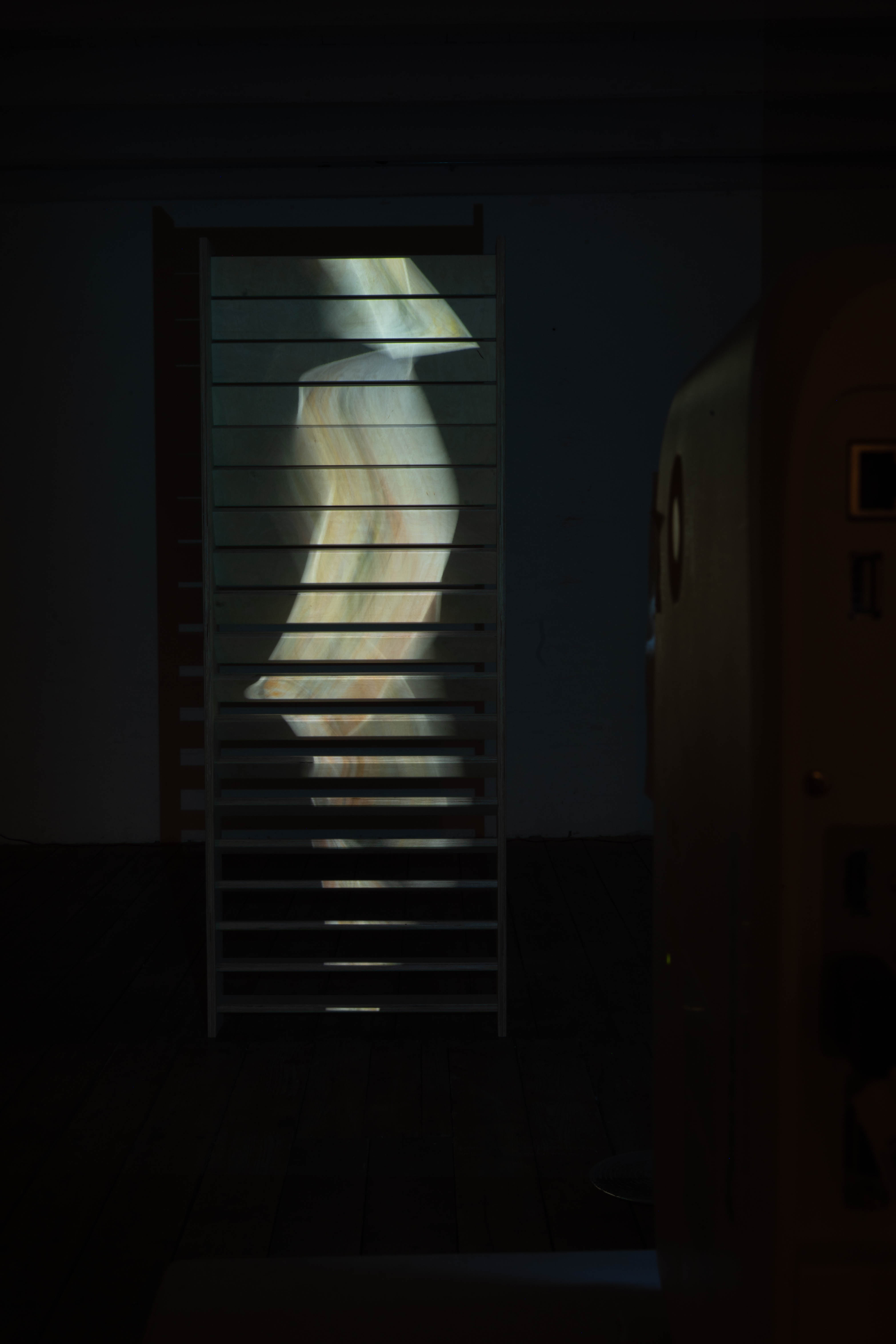
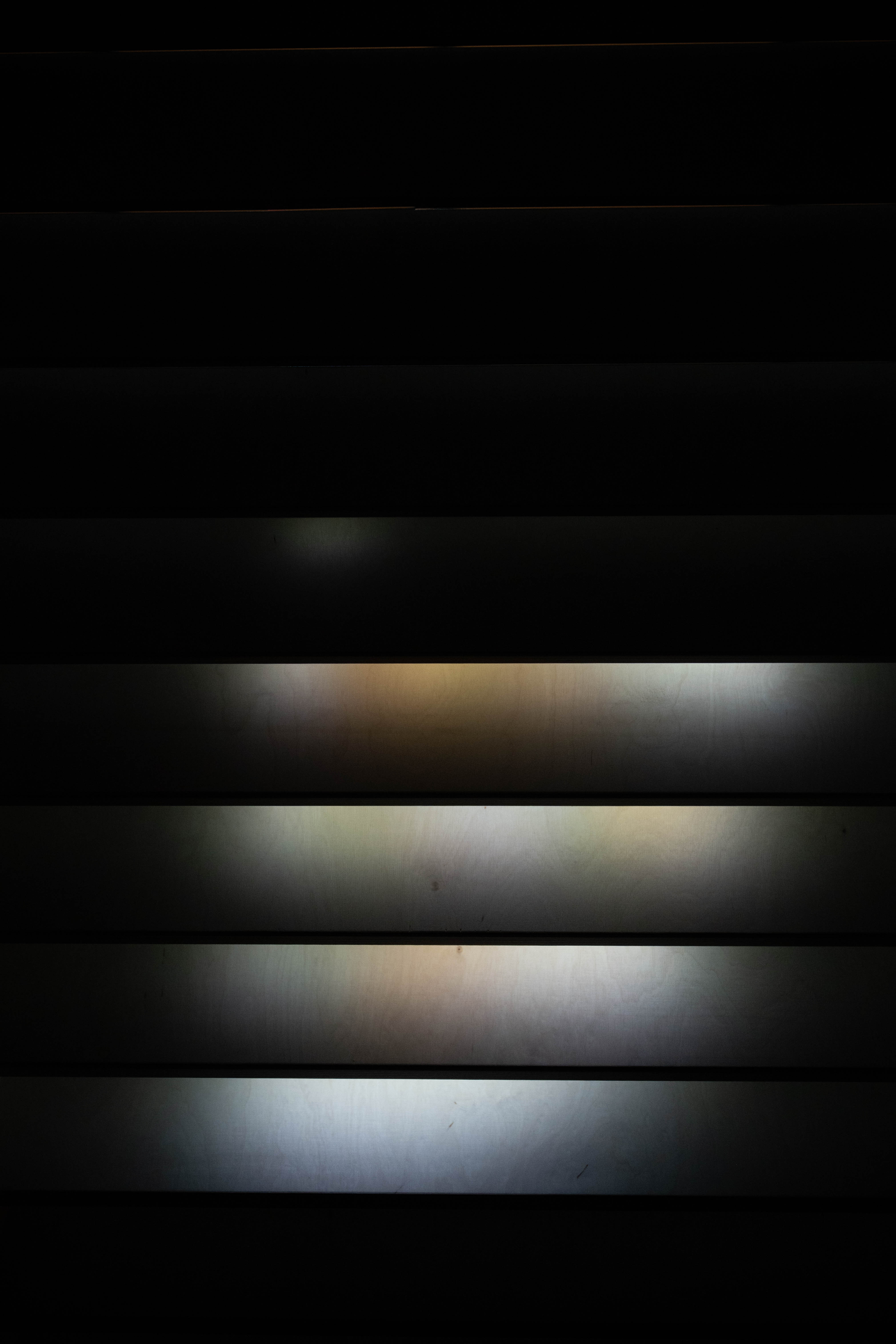
Memory Trace, 2025, Photo: Lars Gonikman
TECHNICAL STRUCTURE
Memory Trace is a real-time interactive installation, technically composed of three main components: the website, the AI reconstruction system, and the engine that outputs and displays the reconstructed images. These three parts are closely interconnected, exchanging data in real time based on audience interaction.
Through the website, visitors can select one of three memories and request its reconstruction. Once this request is received, the AI algorithm begins generating an infinite stream of reconstructed images, which are transmitted in real time. For the AI reconstruction, I used the image generation software Stable Diffusion. In particular, to transform the drawings into photorealistic images, I incorporated a custom Lora model trained on my own childhood photographs. This allowed the reconstructions to capture a more personal and sensorial feeling, closely reflecting the atmosphere of my own memories.
Developed at
University of the Arts Bremen
Academic Supervision
Prof. Ralf Baecker
Prof. Dennis Paul