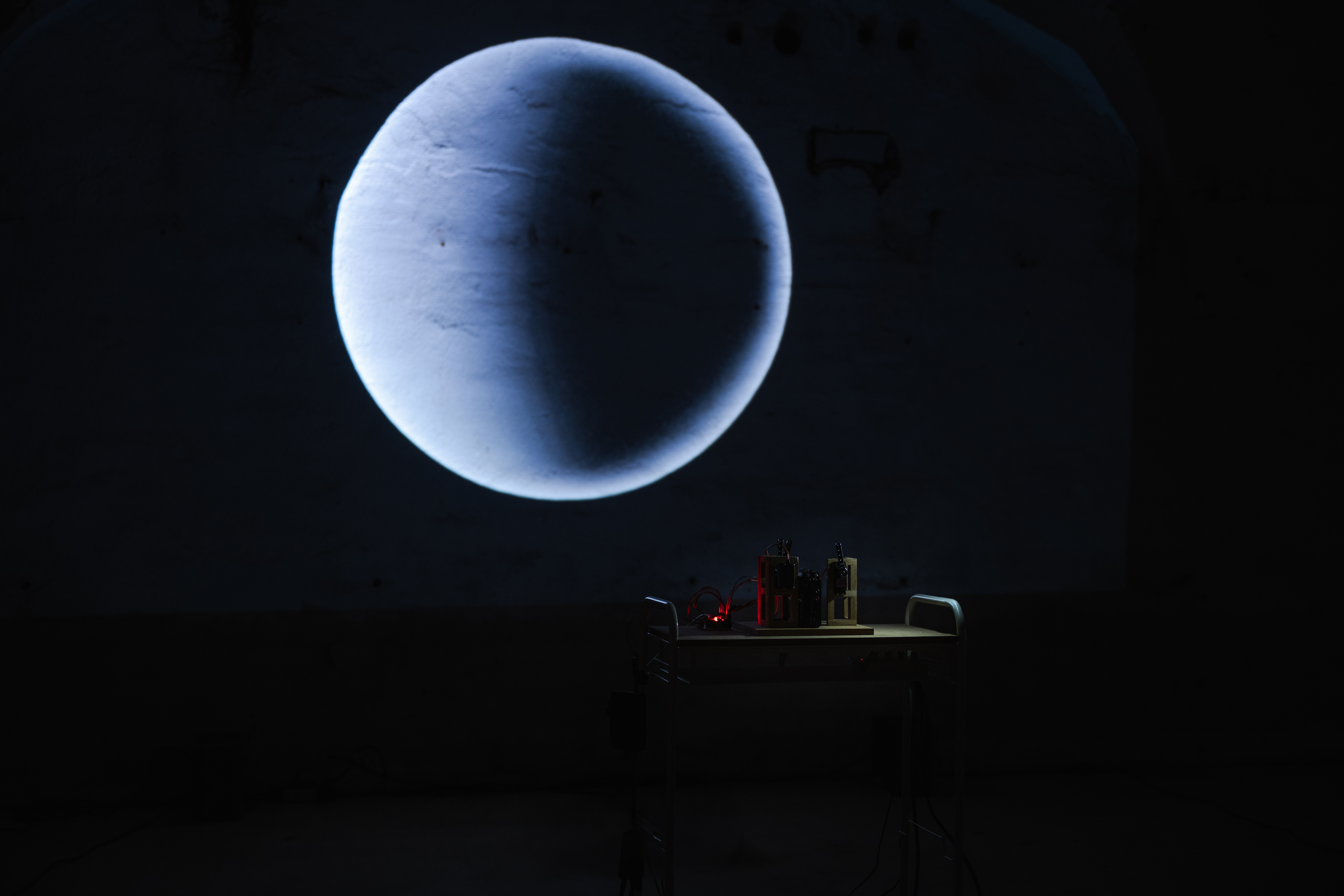
Taper, 2026, Photo: Lars Gonikman
Taper, 2026, Documentation Video, Camera: Lars Gonikman
2026, Installation
Taper is an installation that explores whether artificial intelligence can learn and reproduce not only a human voice but also the noise and traces of time accumulated on an analog cassette tape. A voice is recorded onto tape, and an AI learns to imitate both the voice and the noise and tonal characteristics produced through the recording process. The generated output is then recorded back onto tape, becoming the source for the next generation of learning as the cycle repeats.
With each repetition, new noise and unpredictable variations accumulate. The work presents these changes through both sound and data visualization. The visualization is based on the differences between the vector representations of the cassette-recorded voice and the AI-generated voice, revealing the subtle errors and transformations that emerge through repeated reproduction.
Rather than pursuing perfect replication, Taper considers aging not as a defect but as a trace of time. It asks whether aging itself can be reproduced, or whether it remains a quality unique to things that have truly endured the passage of time.
Taper, 2026, Photo: Lars Gonikman
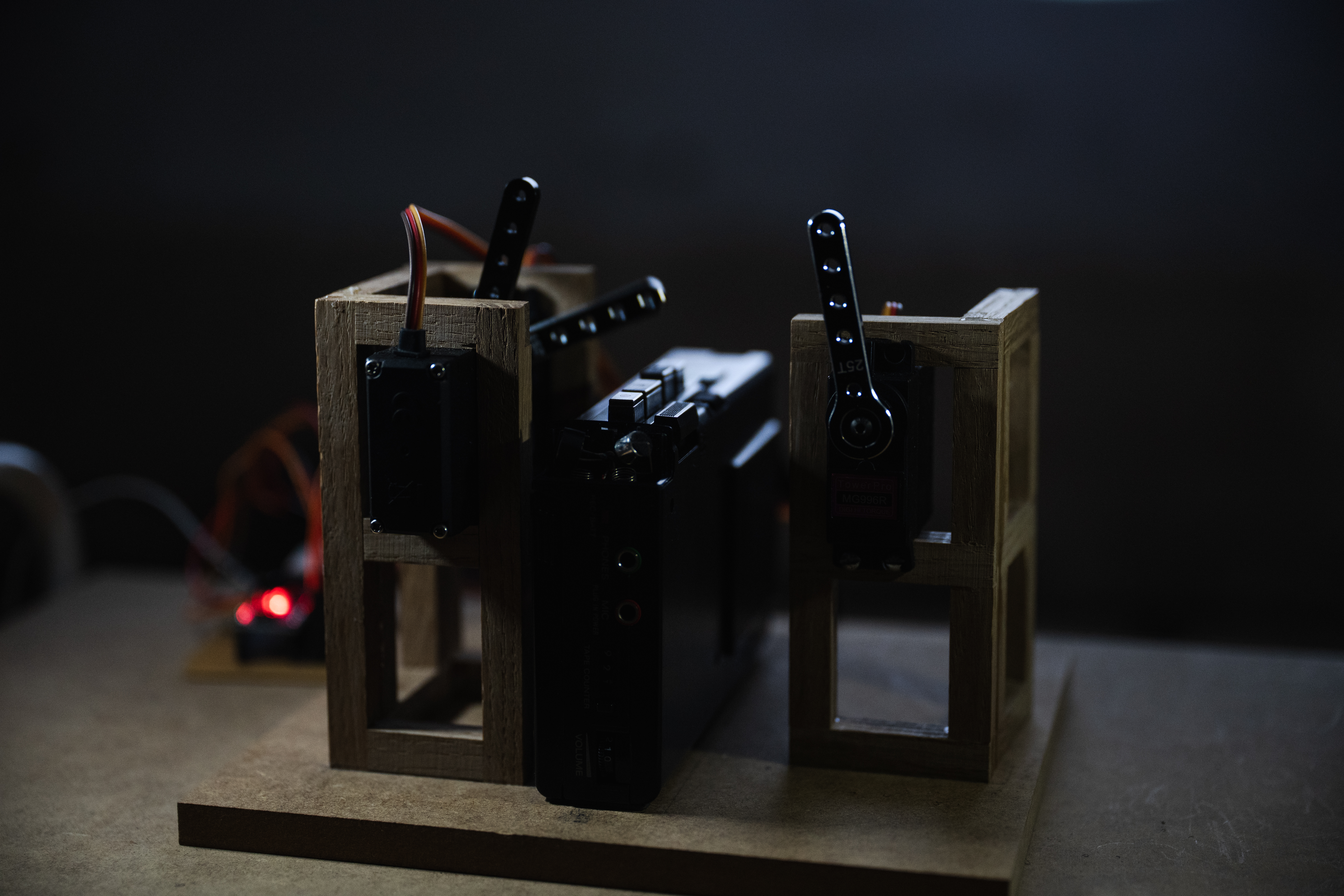
Taper, 2026, Photo: Lars Gonikman
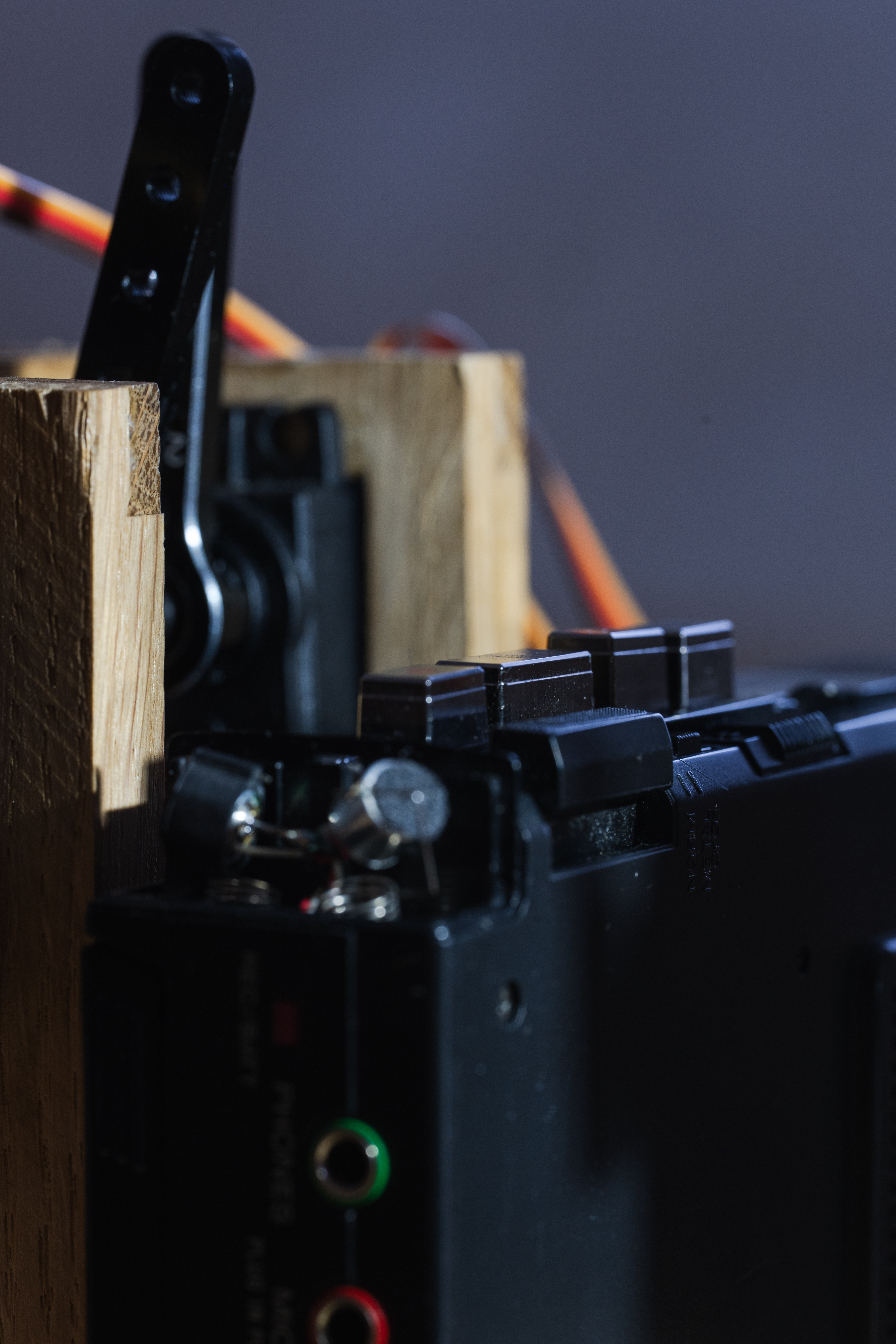
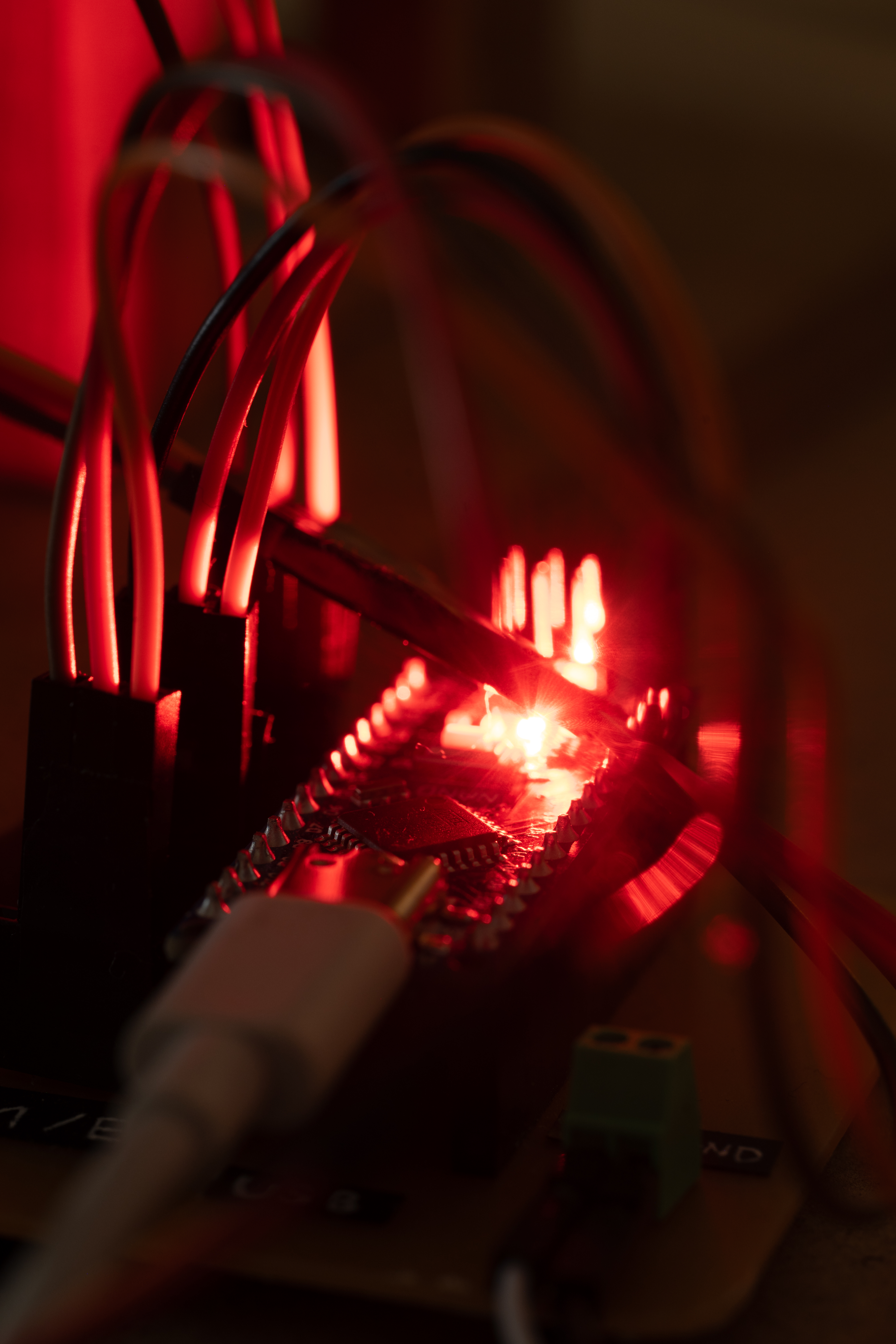
Taper, 2026, Photo: Lars Gonikman
Technical Description
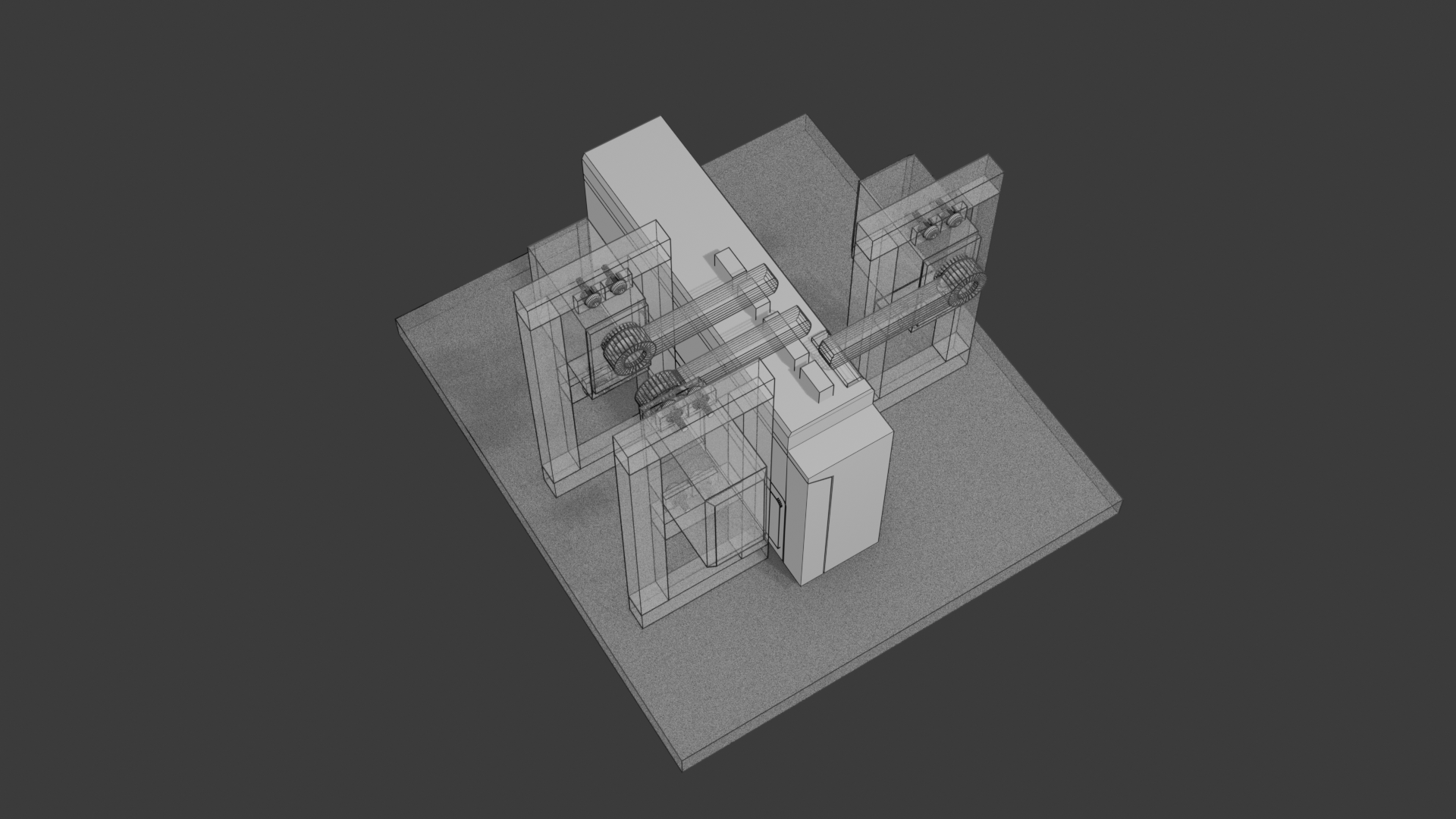
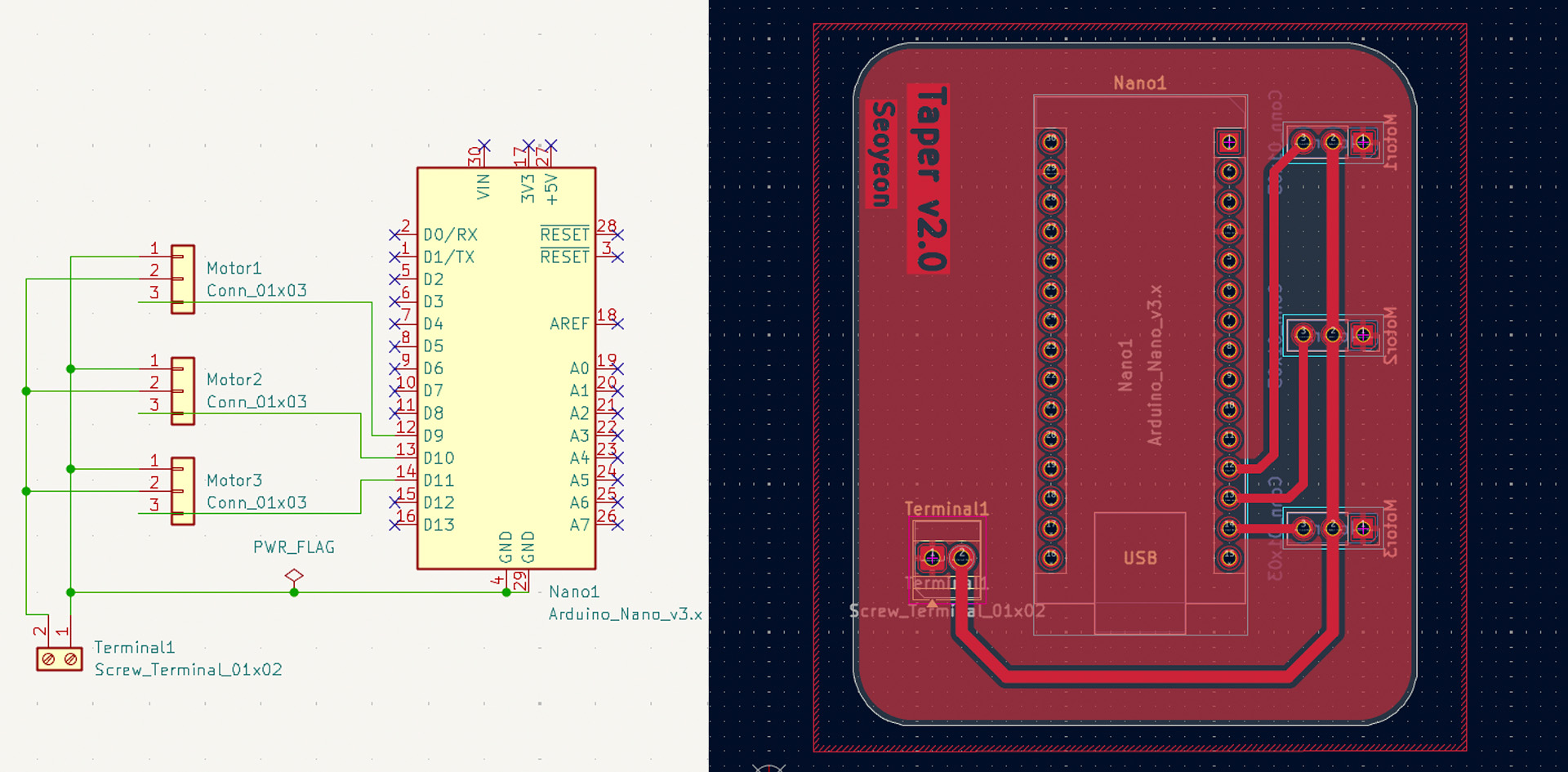
Taper uses a PCB to connect an Arduino to three motors that physically control a cassette player. Each motor presses one of the play, pause, and rewind buttons, repeating these actions in a programmed sequence.
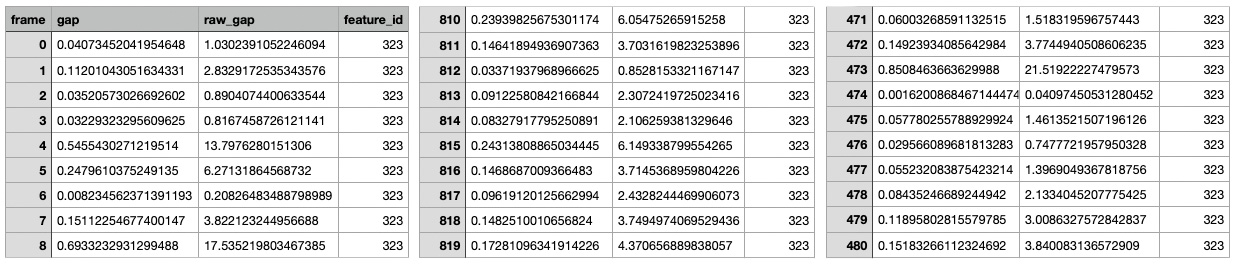
The AI-reconstructed audio is divided into 1,000 segments, and the differences between each segment and the corresponding segment of the original cassette recording are quantified. The 323rd feature, which showed the most pronounced differences, was selected for the visualization.
Developed at
Bauhaus-Universität Weimar
Academic Supervision
Prof. Ursula Damm
Mindaugas Gapševičius
Michael Fischer
Lotta Stöver